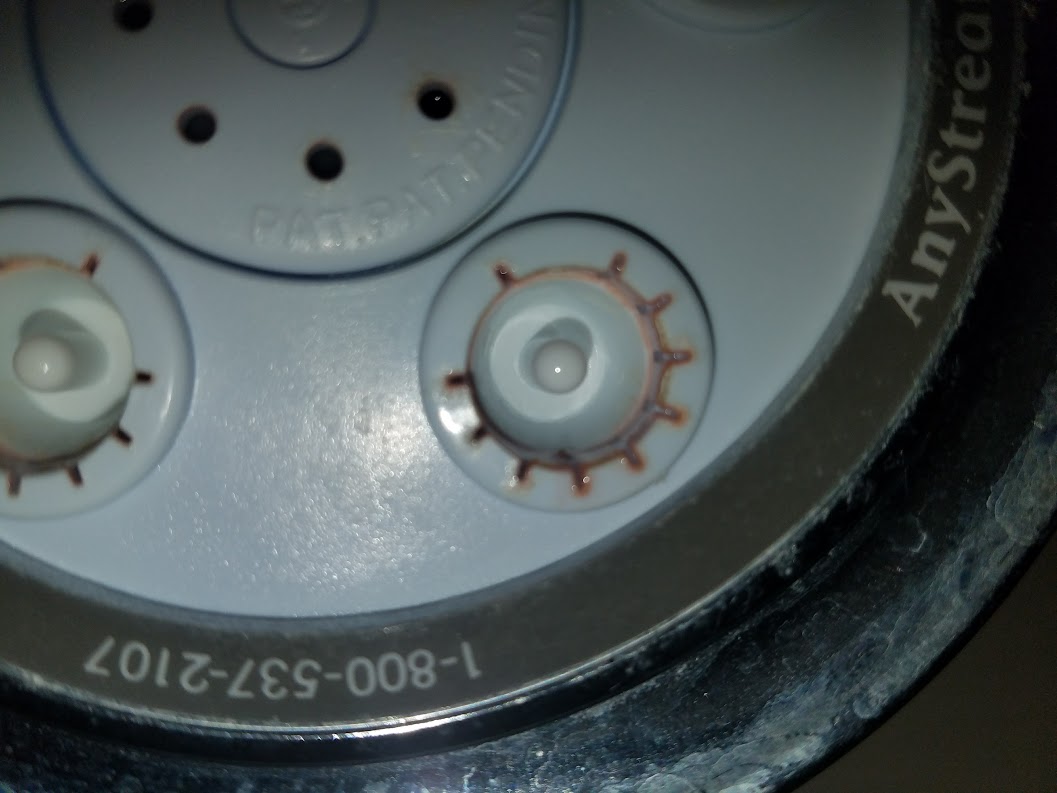
If you have ever scrubbed a pink or salmon-colored film off your shower walls, grout, or curtain and wondered whether you were looking at mold, you are not alone. I get this question constantly, from homeowners, from dealers, from people who corner me at trade shows because they heard I know about weird water issues. The short answer is that it is almost never mold; It is bacteria, and once you understand what it wants, it becomes a lot easier to manage.
What you are actually looking at
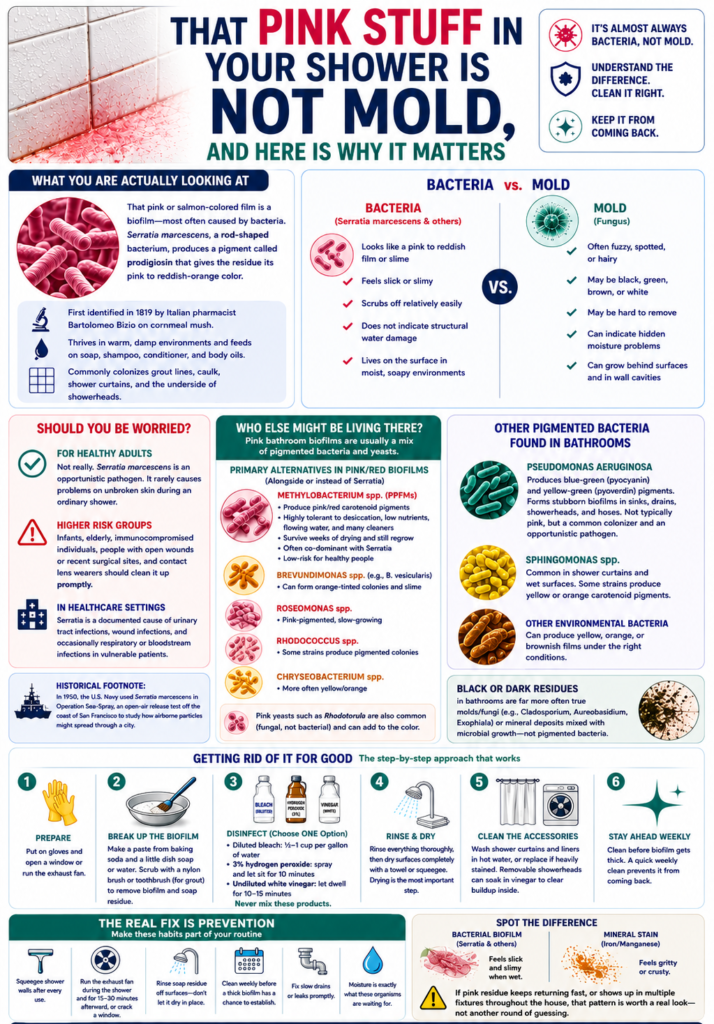
The organism responsible for that slimy pink film is usually Serratia marcescens, a rod-shaped bacterium that lives quietly in soil, water, and the air around us. It was first described back in 1819 by an Italian pharmacist named Bartolomeo Bizio, who noticed a red discoloration on cornmeal mush and assumed something sinister was happening. What he had actually found was a bacterium that produces a pigment called prodigiosin, and that pigment is what gives the residue its distinctive pink to reddish-orange color.
Serratia does not need much to survive. It thrives in warm, damp environments and feeds on fatty residue left behind by soap, shampoo, conditioner, and body oils. Give it consistent moisture and a food source, which describes most showers on the planet, and it will happily colonize your grout lines, caulk, curtain folds, and the underside of your showerhead.
Here is the distinction worth remembering: mold is a fungus, Serratia is a bacterium, and they behave differently. Mold tends to look fuzzy or spotted and often signals a hidden moisture problem in a wall or ceiling cavity. The pink film scrubs off relatively easily and does not indicate structural water damage.
Different biology, different cleanup, and a different level of concern.
It is not just Serratia
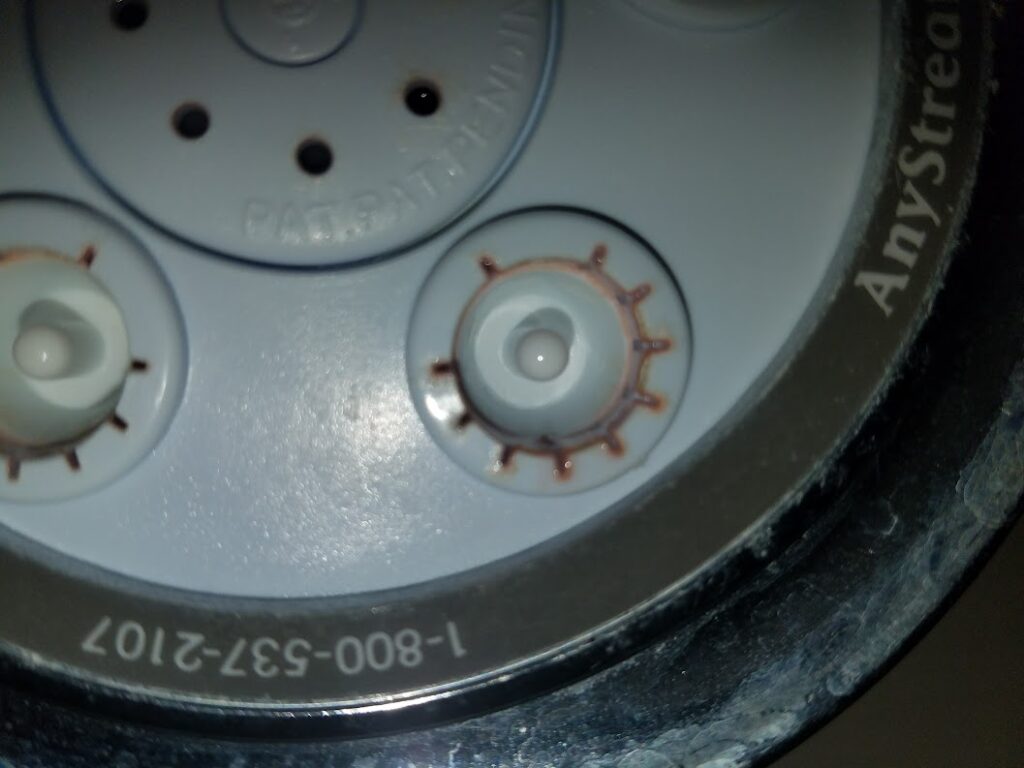
Serratia marcescens gets nearly all the credit in popular writing, largely because prodigiosin is such a vivid pigment and the name is memorable. Actual laboratory surveys of household pink biofilms tell a more interesting story.
A research team at Kao Corporation in Japan swabbed forty-two pink biofilms from real bathrooms and found bacterium-sized cells dominating nearly all of them under the microscope. When they isolated and identified the organisms, Methylobacterium species turned up in every single sample. A separate nanopore sequencing study of shower water and showerhead biofilms found the same genus leading the pack, making up roughly a quarter of the bacterial community in biofilm samples, alongside Sphingomonas running a close second. These are pink-pigmented facultative methylotrophs, sometimes shortened to PPFMs, and they are remarkably tough. The Kao researchers found their isolates survived direct contact with common cleaning agents, including benzalkonium chloride, a quaternary ammonium compound found in a lot of bathroom sprays, for a full twenty-four hours. That resilience helps explain a complaint I hear constantly: “I clean it and it just comes right back.”
Other pigmented organisms show up in these communities too, including Brevundimonas and Roseomonas species, occasional Rhodococcus, and pink-pigmented yeasts like Rhodotorula, which are fungal rather than bacterial. Pseudomonas aeruginosa deserves a mention here as well. It is not usually responsible for the classic pink film, but it is a well-documented colonizer of drains, showerheads, and hoses, producing its own water-soluble pigments, a blue-green compound called pyocyanin and a yellow-green fluorescent one called pyoverdine. Like Serratia, it is an opportunistic pathogen worth taking seriously for anyone who is immunocompromised.
What we see in most bathrooms is a small mixed community of pigmented, moisture-loving, low-nutrient bacteria rather than a single named villain, and Methylobacterium‘s stubborn tolerance to drying and cleaning chemicals is a big part of why the pink film shows up again just when you thought you had beaten it.
Should you be worried about it?
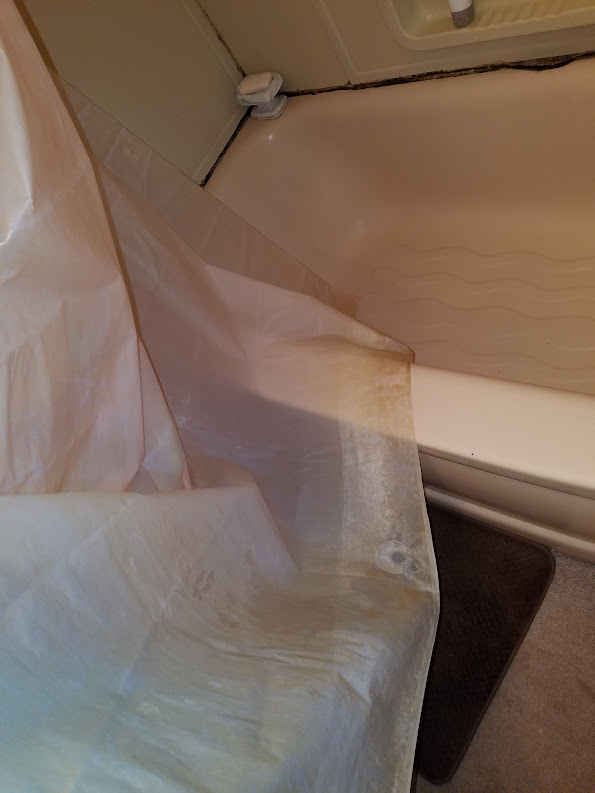
For a healthy adult with intact skin, the honest answer is no, not really. Serratia marcescens is classified as an opportunistic pathogen, which means the organism causes trouble mainly when it finds a way past your body’s normal defenses, through a break in the skin, a catheter, contact lenses worn too long, or a compromised immune system. On unbroken skin during an ordinary shower, it is not doing much of anything to you.
That risk profile shifts for certain groups. Infants, the elderly, anyone who is immunocompromised, people with open wounds or recent surgical sites, and contact lens wearers should take the residue more seriously and clean it up promptly rather than letting it linger. In healthcare settings, Serratia is a documented cause of urinary tract infections, wound infections, and occasionally respiratory or bloodstream infections in vulnerable patients. Your bathroom is not a hospital ward, but the underlying biology is the same organism, so a little extra diligence for at-risk household members is reasonable.
One fascinating historical footnote: this same organism was used in 1950 by the U.S. Navy in a controversial open-air release test off the coast of San Francisco called Operation Sea-Spray, intended to study how airborne particles might spread through a city. Nobody involved understood at the time that Serratia could behave as an opportunistic pathogen. It is a reminder that our understanding of even common microorganisms keeps evolving.
Getting rid of it for good
Bleach alone often disappoints people here. It can fade the pink color temporarily, but if you do not physically break up the biofilm underneath, the bacteria regroup and the color comes right back within days. Physical removal matters as much as disinfection.
Here is the approach that works well:
- Safety First. Gloves on, window open and/or exhaust fan running.
- Pre-scrub. Make a paste from baking soda and a small amount of dish soap or water. Apply it to the affected areas and scrub with a nylon brush or an old toothbrush for grout lines. This step breaks up the biofilm and removes the soap residue feeding it.
- Disinfect. Pick one product and stick with it, never mixed with another at the same time.
- Diluted bleach: roughly half a cup to one cup per gallon of water.
- Hydrogen peroxide: three percent, sprayed directly, left to sit for ten minutes.
- White vinegar: undiluted, left to dwell for ten to fifteen minutes before scrubbing. Many people prefer this option because it tends to hold results longer.
- Rinse and Dry. Rinse everything thoroughly, then dry the surfaces completely with a towel or squeegee. This last step is the one people skip, and it is arguably the most important one.
- Handle fabric and fixtures. Wash shower curtains and liners in hot water, or replace them if the staining is heavy. Removable showerheads can soak in vinegar to clear buildup inside the fixture itself.
The real fix is prevention
Cleaning up an existing colony is a one-time project. Keeping it from coming back is a habit.
- Squeegee your shower walls after every use.
- Run the exhaust fan during the shower and for fifteen to thirty minutes afterward, or crack a window if you have one.
- Rinse soap residue off surfaces rather than letting it dry in place.
- Clean weekly before a thick biofilm has a chance to establish itself.
- Fix any slow drains or minor leaks promptly, because standing moisture is exactly what this organism is waiting for.
When it might be something else, or something more
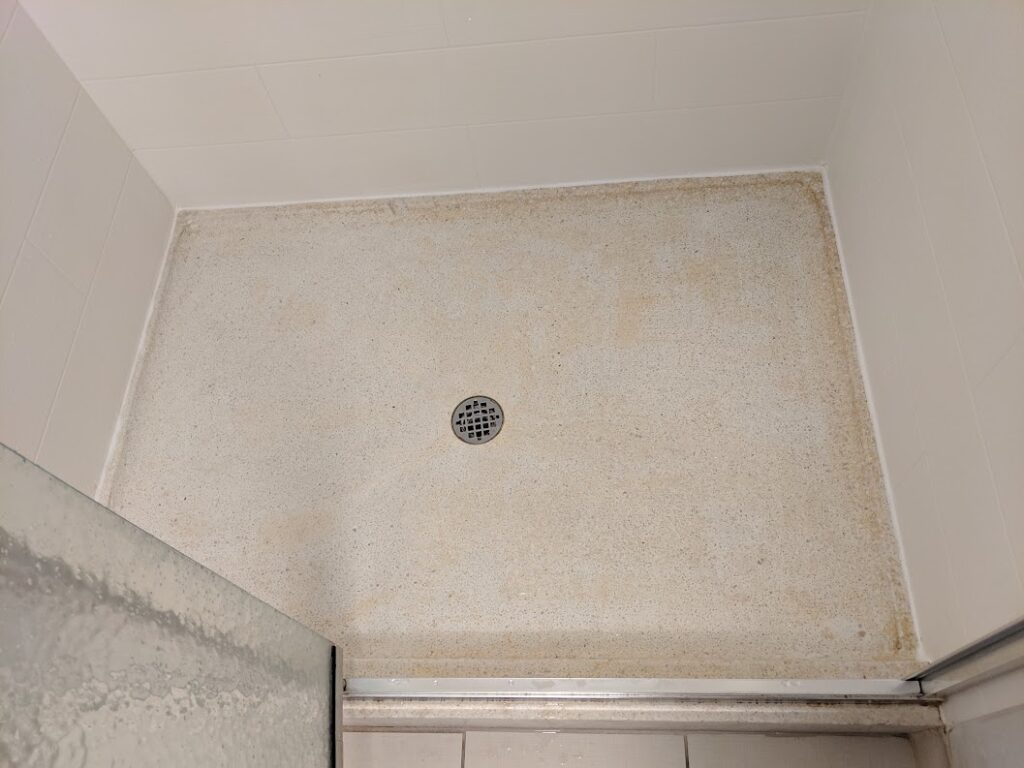
Occasionally what looks like Serratia is actually a mineral stain from iron or manganese in your water supply. The tell is texture. Bacterial biofilm feels slick and slimy when wet, while mineral staining tends to feel gritty or crusty. If you are cleaning diligently and the pink residue keeps returning fast, or if it shows up in multiple fixtures throughout the house, that pattern is worth a real look rather than another round of guessing at the hardware store.
WQA-certified water treatment professionals are trained to distinguish between a simple cleaning issue and an underlying water quality problem, and they have access to proper water testing to confirm what is actually in your supply. If a home consistently shows heavy microbial growth or unusual staining despite good cleaning habits, a certified professional can test the water and recommend NSF/ANSI-certified treatment equipment matched to what your test results actually show, rather than a guess. Certified people using certified products remain the most reliable path to solving a persistent water quality problem, and that is precisely the standard WQA holds its members to. You can find a certified professional near you at wqa.org.
For most households, though, this is simply a matter of chemistry and habit. Break up the biofilm, disinfect, dry your surfaces, and stay ahead of it weekly. Do that, and the pink residue stops being a recurring nuisance and becomes a rare annoyance you handle in five minutes.
Further reading
Microchem Laboratory. (2024). Serratia marcescens. Retrieved from https://microchemlab.com/microorganisms/serratia-marcescens/
Saha, S., & Kumar, A. (2025). Serratia marcescens: A versatile opportunistic pathogen with emerging clinical and biotechnological significance. PMC. Retrieved from https://www.ncbi.nlm.nih.gov/pmc/articles/PMC12691863/
Suryawanshi, N., et al. (2017). Effects of Bacillus serine proteases on the bacterial biofilms. PMC. Retrieved from https://www.ncbi.nlm.nih.gov/pmc/articles/PMC5585633/
Yano, T., Kubota, H., Hanai, J., Hitomi, J., & Tokuda, H. (2012). Stress tolerance of Methylobacterium biofilms in bathrooms. Microbes and Environments, 28(1), 87-95. Retrieved from https://www.ncbi.nlm.nih.gov/pmc/articles/PMC4070686/
Kubota, H., et al. (2021). Structure of bacterial communities in Japanese-style bathrooms: Comparative sequencing of bacteria in shower water and showerhead biofilms using a portable nanopore sequencer. bioRxiv. Retrieved from https://www.biorxiv.org/content/10.1101/2021.07.14.452346v1.full
Water Quality Association. (n.d.). Find a certified professional. Retrieved from https://wqa.org