A Lifesaving innovation, enduring benefits, and modern realities
Chlorine-based disinfection remains one of the most transformative public health interventions in human history. Introduced systematically to municipal water supplies in the early 20th century, it has virtually eliminated major waterborne epidemics of cholera, typhoid fever, dysentery, and hepatitis A in developed nations, saving millions of lives annually.
A brief history and proven benefits of Chlorine disinfection
The first continuous chlorination of a U.S. public water supply occurred in 1908 in Jersey City, New Jersey. Within decades, typhoid fever rates plummeted, from approximately 100 cases per 100,000 people in 1900 to near elimination by the mid-20th century. Similar success stories unfolded globally wherever chlorination was adopted alongside filtration. The Centers for Disease Control and Prevention (CDC) and World Health Organization (WHO) hail chlorination as one of the greatest public health achievements of the 20th century.
Chlorine acts as a powerful oxidant, rapidly damaging microbial cell walls, proteins, and nucleic acids. Critically, it leaves a residual disinfectant in the water, providing ongoing protection through long distribution networks. Something many alternative disinfectants cannot match. Today, over 98% of U.S. community water systems rely on chlorine or chloramine for this purpose.
Why some communities use Chloramine instead
Many utilities (now over half of large U.S. systems) employ chloramine (formed by combining chlorine with ammonia) as a secondary disinfectant. Chloramine offers a more stable residual that persists longer in pipes, often produces fewer regulated disinfection byproducts (DBPs) like trihalomethanes in certain source waters, and imparts a milder taste and odor profile. Utilities sometimes temporarily switch back to free chlorine for “burns” to control biofilm buildup.
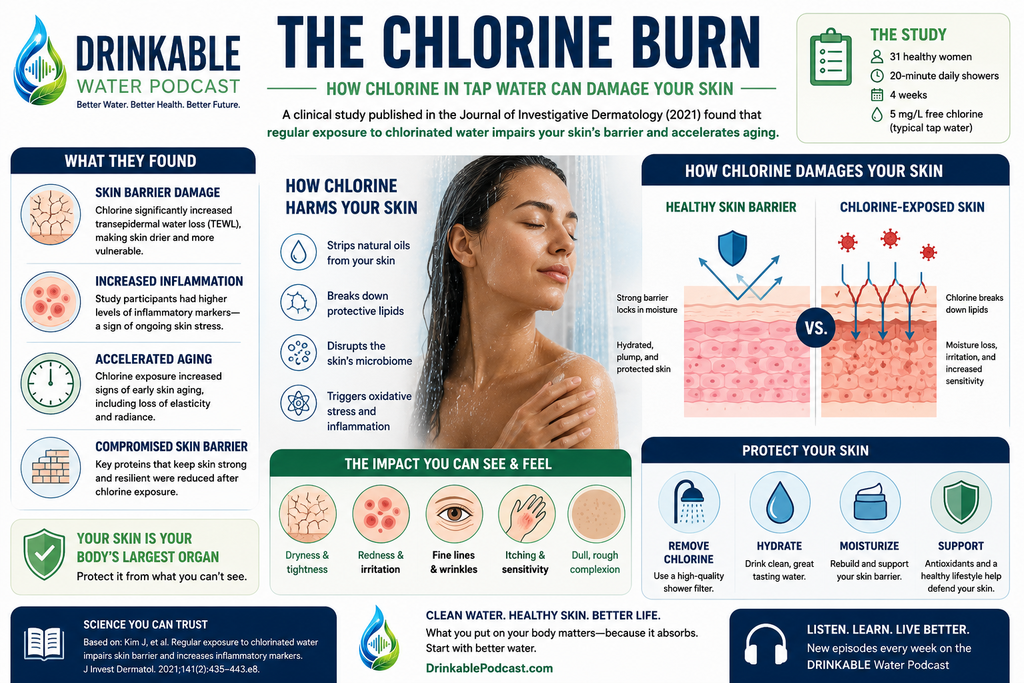
However, chloraminated systems are not without challenges. The primary inadequacy is nitrification, a two-step biological process driven by ammonia-oxidizing bacteria (AOB) and nitrite-oxidizing bacteria (NOB). Excess or decaying ammonia released from chloramine decomposition serves as a substrate:
AOB convert it to nitrite, and NOB further oxidize nitrite to nitrate. This depletes the disinfectant residual, elevates nitrite and nitrate levels (nitrite is regulated by the EPA at a maximum contaminant level of 1 mg/L as nitrogen), reduces pH and alkalinity, consumes dissolved oxygen, and can promote pipe corrosion that releases metals such as lead or copper. Uncontrolled nitrification also fosters biofilms that may harbor opportunistic pathogens and cause taste/odor complaints from dichloramine formation. These issues are more pronounced in warmer months, areas with long water ages, low demand, or variable source-water conditions.
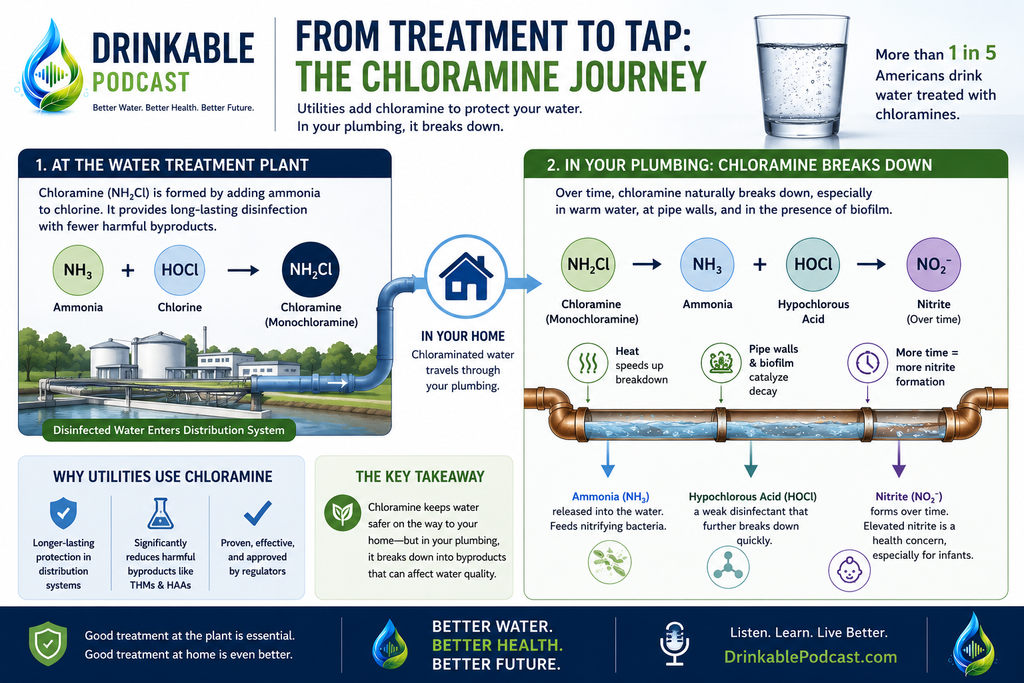
The “Chlorine Burn” and the North Texas example
To address nitrification and maintain system reliability, many chloramine-using utilities, including the North Texas Municipal Water District (NTMWD), which serves over 2.3 million people, conduct periodic free chlorine conversions, commonly called a “chlorine burn.”
In North Texas, NTMWD performs this annually for approximately four weeks each spring (e.g., March 2–30, 2026). The utility temporarily suspends ammonia addition after primary disinfection (ozone + chlorine), relying solely on free chlorine. This stronger oxidant more effectively inactivates nitrifying bacteria, disrupts biofilms, oxidizes accumulated ammonia, and restores disinfectant residuals ahead of warmer months when bacterial growth accelerates. Cities often assist by flushing hydrants to move the water through the system faster. The practice is endorsed by the Texas Commission on Environmental Quality (TCEQ) and is used by up to 40% of U.S. chloramine systems.
Research by Dr. Katherine Alfredo (University of South Florida) and colleagues provides critical insight into these conversions. Her 2021 study, “The ‘Burn’: water quality and microbiological impacts related to limited free chlorine disinfection periods in a chloramine system,” examined a full-scale chloraminated distribution system during a 1.5-month free chlorine period. The burn effectively controlled nitrification (significantly lowering free ammonia and nitrite levels) and reduced opportunistic pathogen concentrations (e.g., Legionella, Mycobacterium) in water mains during the conversion. However, the benefits were largely transient: OP levels in mains rebounded to pre-burn levels within weeks after returning to chloramine, and the effect was even weaker in residential premise plumbing due to greater stagnation and faster residual decay. The study also documented substantial increases in regulated and unregulated DBPs, as well as elevated iron levels during the burn, highlighting trade-offs in water quality.
Alfredo’s more recent collaborative work (with H. Jakpa et al., 2024) further explores how chlorine conversions affect point-of-use activated carbon block filters, revealing elevated nitrification risk and microbial shifts in stagnant filters post-burn. These findings suggest that while chlorine burns are a practical short-term tool, their long-term efficacy for pathogen control is limited, and utilities should weigh them against potential DBP spikes and the need for optimized, ongoing monitoring.
Disinfection byproducts
When chlorine (or chloramine) reacts with natural organic matter in source water, it forms hundreds of DBPs, primarily trihalomethanes (THMs, e.g., chloroform) and haloacetic acids (HAAs). The EPA regulates a small subset under the Stage 1 and Stage 2 Disinfectants and Disinfection Byproducts Rules to balance microbial safety with chronic exposure concerns.
Currently Regulated DBPs
The following are the primary regulated disinfection byproducts with enforceable maximum contaminant levels (MCLs):
- Total Trihalomethanes (TTHM): 80 µg/L (sum of chloroform, bromodichloromethane, dibromochloromethane, and bromoform)
- Haloacetic Acids (HAA5): 60 µg/L (sum of monochloroacetic acid, dichloroacetic acid, trichloroacetic acid, monobromoacetic acid, and dibromoacetic acid)
- Bromate: 10 µg/L (primarily from ozone disinfection)
- Chlorite: 1.0 mg/L (from chlorine dioxide disinfection)
These 11 compounds serve as indicators for the broader DBP mixture. Compliance is calculated as locational running annual averages (LRAA) under Stage 2 to target hotspots in distribution systems.
Unregulated DBPs Monitored or Studied (Including Under UCMR Programs)
Hundreds of additional DBPs exist and are not currently regulated at the federal level. Earlier UCMR cycles (e.g., UCMR4) monitored additional haloacetic acids (HAA9, HAA6Br), while ongoing research focuses on:
- Haloacetonitriles (HANs, e.g., dichloroacetonitrile, dibromoacetonitrile)
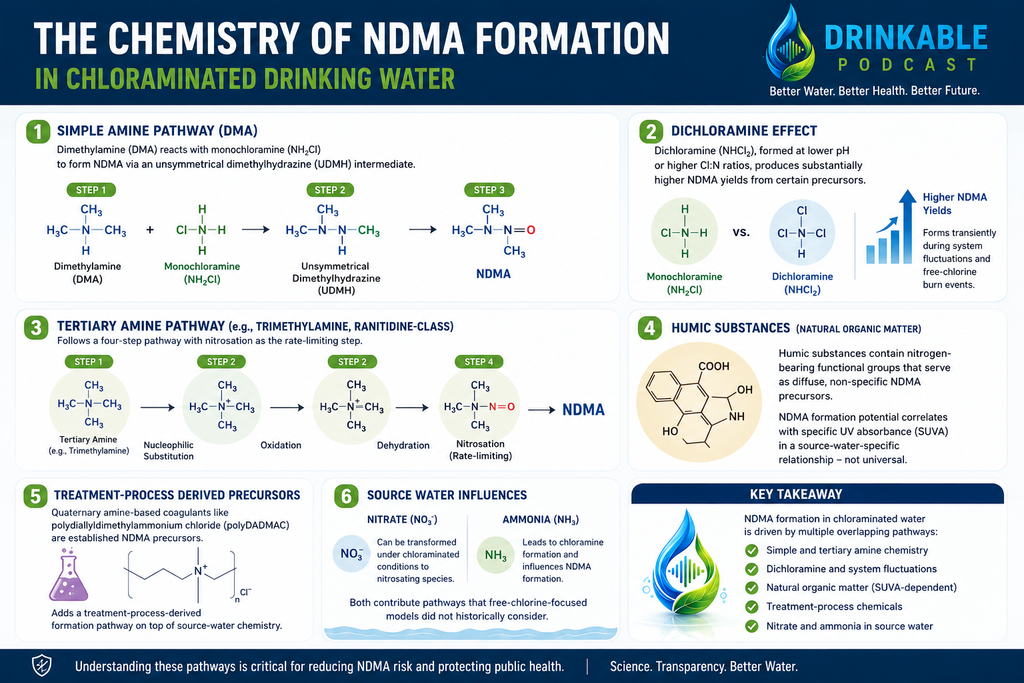
- N-nitrosamines (e.g., N-nitrosodimethylamine or NDMA)
- Haloacetamides
- Halonitromethanes (e.g., chloropicrin)
- Iodinated DBPs and other nitrogenous species
These are tracked because toxicological data suggest they may pose greater per-mass risks than regulated compounds.
Comparison of Known and Suspected DBP Risks by Disinfectant
Free chlorine and chloramine produce overlapping yet distinct DBP profiles, with differing toxicity implications supported by peer-reviewed cytotoxicity/genotoxicity assays, epidemiological meta-analyses, and government reviews (e.g., EPA, CDC, Plewa laboratory studies using Chinese hamster ovary cell assays).
- Free Chlorine (Cl₂): Favors carbonaceous DBPs (C-DBPs) such as THMs and HAAs. These are the primary regulated compounds. Epidemiological meta-analyses link long-term exposure (especially TTHM >50 µg/L) to modestly elevated bladder cancer risk (odds ratios 1.3–1.6 in case-control studies, stronger in males and after 30+ years). Reproductive/developmental signals (e.g., small-for-gestational-age births, certain congenital anomalies) are smaller and less consistent. In vitro studies rank many C-DBPs as moderately cytotoxic/genotoxic compared with nitrogenous species. Free chlorine generally produces lower levels of nitrogenous DBPs unless nitrogen precursors are abundant.
- Chloramine (NH₂Cl): Produces significantly lower regulated C-DBPs (often 50–70% reduction in TTHM/HAA5) but shifts toward nitrogenous DBPs (N-DBPs) because ammonia supplies nitrogen. Key examples include haloacetonitriles (HANs), haloacetamides, NDMA, and cyanogen chloride. Many N-DBPs are orders of magnitude more cytotoxic and genotoxic per mass than regulated THMs/HAAs in mammalian cell assays (e.g., HANs and haloacetamides rank among the most potent DBP classes). NDMA is a probable human carcinogen with very low ng/L potency. Chloramine systems can also elevate iodinated DBPs in bromide/iodide-rich waters. During chlorine burns, some N-DBPs spike alongside regulated DBPs. Overall, while chloramine reduces some bladder cancer-linked exposures, it introduces N-DBPs whose long-term mixture effects are still under active study.
- Other Disinfectants (Brief Context): Ozone favors bromate and haloacetaldehydes; chlorine dioxide favors chlorite. These are regulated but contribute to different toxicity profiles. No single disinfectant eliminates all DBP risks. Trade-offs are inevitable.
Public health authorities emphasize that the benefits of preventing acute microbial disease far outweigh these low-level chronic risks at current regulatory limits. Modern treatment and monitoring continue to reduce exposures, though unregulated/emerging DBPs remain under study. Obviously to enjoy the best water, have a municipal supply that chlorinates appropriately and then filter the tastes, odors, and DBPS with certified filtration systems installed by certified professionals.
Chloramine-Specific DBPs and Their Potential Harm
Chloramine-associated N-DBPs (HANs, NDMA, haloacetamides) exhibit higher cytotoxicity, mutagenicity, and developmental toxicity than many regulated C-DBPs on a per-mass basis. NDMA is a potent liver carcinogen in animal models; some states set notification levels as low as 10 ng/L. Chlorine burns can temporarily elevate both regulated and unregulated DBPs.
Taste, odor, and mechanical effects on home plumbing
Consumers often notice a “swimming pool” or chemical taste/odor during chlorine burns or with chloramine fluctuations, particularly in hot water. These are regarded by regulators as aesthetic issues, not safety concerns. Both free chlorine and chloramine exert measurable mechanical and chemical effects on residential plumbing, fixtures, appliances, and even laundry-effects that can accelerate wear, increase maintenance costs, and lead to premature failures.
Copper pipe corrosion and pinhole leaks represent one of the most significant infrastructure risks. Both disinfectants act as strong oxidizers that can promote localized pitting corrosion. Chloramine is frequently implicated in aggressive pitting, especially in systems with low alkalinity, low-hardness water, or pH fluctuations, leading to pinhole leaks that may go undetected for months and cause extensive water damage, mold growth, and costly repairs. Multiple studies and utility reports document clusters of pinhole leaks following chloramine adoption, with some homeowners experiencing systemic failures in copper plumbing installed as recently as the 1990s–2000s. Free chlorine can also contribute, particularly in combination with other factors such as aluminum carryover from treatment or sulfate-reducing bacteria in low-residual areas. While not every system experiences this, homeowners in chloraminated areas are often advised to monitor for early signs (small wet spots, phantom flow on the water meter, or reduced pressure) and consider whole-house filtration or even pipe replacement in severe cases.
Rubber seal and elastomer degradation is another well-documented issue. Chloramine, in particular, is highly aggressive toward common elastomers such as EPDM, nitrile, neoprene, and natural rubber used in toilet flappers, fill valves, dishwasher gaskets, washing machine hoses, O-rings in faucets and valves, and water-heater components. Prolonged exposure causes these materials to lose elasticity, become brittle, crack, swell, or turn into a mushy black residue that can flake into the water. Failures appear as leaks, dripping fixtures, or black particles in water. Free chlorine also accelerates aging, but chloramine’s longer persistence often results in faster and more widespread damage. Manufacturers now offer chloramine-resistant formulations, but many legacy components in older homes degrade noticeably within 2–5 years of exposure.
Faucet and fixture finishes can suffer indirect damage. Oxidation from residual disinfectants may dull or discolor chrome, brass, or PVD coatings over time, especially when combined with hard water or improper cleaning. More critically, degraded internal O-rings and seals in modern faucets can lead to leaks or handle stiffness. Exposed brass or copper components may experience dezincification or surface corrosion in chloraminated water.
Laundry interactions add another layer of everyday impact. Repeated washing in chlorinated or chloraminated water can gradually fade colors (particularly dark fabrics turning gray or dull), weaken natural fibers such as cotton and linen, and contribute to yellowing or dinginess in whites. Chlorine’s oxidizing action breaks down fabric polymers and can react with residual detergents or optical brighteners, producing blotchy discoloration or stiffness. While effects are subtle and cumulative rather than immediate, they shorten the usable life of clothing, towels, and linens, especially delicate or synthetic items.
Additional appliance-level effects include faster anode-rod depletion in water heaters (leading to tank corrosion and reduced efficiency), sediment buildup, and premature gasket or hose failure in dishwashers and washing machines. These cumulative stresses shorten the service life of plumbing systems and appliances, prompting many homeowners to install whole-house dechlorination or catalytic carbon filtration to mitigate long-term costs.
How Effective Is Municipal Chlorination?
Municipal chlorination is highly effective but not 100%. It achieves required log reductions for regulated pathogens when proper concentration, contact time (CT values), pH, and temperature are maintained. However, it does not kill all microorganisms instantly or completely:
- Biofilms in pipes and premise plumbing can consume Chlorine residuals, and protect bacteria.
- Certain protozoan cysts/oocysts (Giardia, Cryptosporidium) are more resistant and usually require supplemental filtration.
- Fungi, mold, and algae are generally more resistant than bacteria; chlorine controls growth but does not eradicate established colonies outright.
Cholera vs. Legionella: A Striking Contrast in Susceptibility
Chlorine is extraordinarily effective against classic fecal-oral pathogens like Vibrio cholerae (this causes Cholera). During outbreaks, WHO recommends free chlorine residuals as low as 0.2–0.5 mg/L at point-of-use to inactivate the bacterium rapidly. Widespread chlorination is the primary reason cholera and similar diseases were virtually eliminated in developed nations’ municipal supplies.
In contrast, Legionella pneumophila is far more resilient. It thrives in warm (77–113°F/25–45°C), stagnant premise plumbing and within protective biofilms or amoebae hosts. Free chlorine can inactivate planktonic Legionella, but CT values are often much higher. Monochloramine penetrates biofilms better and is associated with significantly lower Legionella colonization rates in buildings compared with free-chlorine systems in some studies. Legionella represents a modern opportunistic pathogen that grows downstream of the treatment plant. Unlike cholera, which is prevented at the source.
Effectiveness Against Viruses in Water
Chlorine excels against viruses. EPA guidance requires systems to achieve at least 4-log (99.99%) inactivation of enteric viruses. Free chlorine accomplishes this with modest CT values (typically 2–12 mg·min/L at pH 6–9) for viruses such as hepatitis A, poliovirus, rotavirus, and norovirus surrogates. Enveloped viruses (e.g., coronaviruses) are even more susceptible. Chloramine is slower against viruses and is used primarily for residual protection rather than primary disinfection.
Microcystins and Algal Toxins
Free chlorine effectively oxidizes microcystins (cyanotoxins from harmful algal blooms) when pH is controlled below 8 and sufficient dose/contact time is provided.
Bacterial Interactions and Byproducts in Chloraminated Waters
In chloraminated systems, bacterial interactions center on nitrification. Excess ammonia serves as a substrate for AOB, which produce nitrite; NOB then convert nitrite to nitrate. This process accelerates chloramine decay, elevates nitrite (a regulated contaminant), depletes oxygen and alkalinity, and can foster biofilms that harbor opportunistic pathogens. Recent research has also identified chloronitramide as a previously uncharacterized byproduct formed during chloramine decomposition. These interactions underscore why utilities invest in monitoring and periodic interventions like chlorine burns.
Nitrification in Point-of-Use Carbon Filters Exposed to Chloramine
Activated carbon block (ACB) point-of-use (POU) filters effectively reduce chlorine, chloramine, and many DBPs, but they can inadvertently amplify nitrification in chloraminated supplies. Carbon media rapidly removes the disinfectant residual through catalytic decomposition (converting chloramine to ammonia, chloride, and nitrogen gas), eliminating the protective barrier against microbial growth. The released ammonia, combined with the nutrient-rich, high-surface-area carbon environment and frequent stagnation (overnight or over weekends), creates ideal conditions for biofilm formation and nitrifying bacteria proliferation.
Catalytic Carbon vs. Regular Activated Carbon
Regular (standard) activated carbon works well for free chlorine, taste/odor compounds, and many volatile organic compounds (VOCs), but it is relatively inefficient at addressing chloramine. Chloramine’s greater stability requires significantly longer empty-bed contact time or larger volumes of media for meaningful reduction. Catalytic carbon (a specially processed form of activated carbon with enhanced reactive/catalytic sites) breaks down chloramine much faster and more completely by catalyzing the chemical decomposition into chloride ions, ammonia, and nitrogen gas. It also offers higher capacity for chlorine, some THMs, hydrogen sulfide, and certain other contaminants, making it the preferred media for chloraminated supplies. However, because catalytic carbon removes chloramine more rapidly, it can release ammonia into the filter more quickly, potentially accelerating nitrification during periods of stagnation if the residual disinfectant is fully depleted.
Benefits of Extruded Carbon Block Filters
Many modern POU systems use extruded carbon block (ECB) filters, in which fine powdered carbon (often catalytic carbon) is compressed into a solid, dense block. Compared with loose granular activated carbon (GAC), ECB filters provide greater effective surface area, longer and more consistent water-carbon contact time, and virtually no channeling (where water flows around rather than through the media).
This results in superior and more uniform removal of chlorine/chloramine, DBPs, taste/odor compounds, and a broader range of organics. ECB cartridges also deliver mechanical filtration benefits (often rated at 0.2–5 micron) reducing sediments, fine particles, and even some cysts when properly certified. They produce fewer carbon fines in the effluent and maintain performance more reliably over their rated lifespan. When manufactured with catalytic carbon media, ECB filters combine excellent chloramine reduction with structural integrity and consistent flow characteristics.
Studies by Dr. Katherine Alfredo and Horace Jakpa demonstrate this clearly. In laboratory simulations bracketing multiple free-chlorine conversion periods, stagnating ACB filters fostered rapid biofilm growth and produced nitrite concentrations as high as 2.5 mg/L-N, well above the EPA maximum contaminant level of 1 mg/L-N. Free-chlorine periods temporarily suppressed nitrification and lowered nitrite, but the effect was short-lived: microbially seeded filters re-nitrified immediately upon return to chloramine. Successive burns induced shifts in the microbial community yet ultimately failed to provide lasting control, resulting in persistently elevated nitrite and increased microbial exposure in the filtered water.
A related 2023 field study of in-line under-sink filters in chloraminated homes showed nitrification beginning shortly after installation, with weekend stagnation samples exceeding 1.5 mg/L-N nitrite within three months (50% above the regulatory threshold). Post-flush nitrite levels sometimes remained elevated, and opportunistic premise plumbing pathogens were detected in the filter biofilms.
These findings highlight that while carbon filters (especially high-performance extruded catalytic carbon block designs) improve taste, odor, and DBP reduction for homeowners, they require regular replacement , thorough flushing before use, and awareness of stagnation risks in chloraminated systems. Catalytic carbon variants remove chloramine more efficiently but do not eliminate the potential for downstream nitrification once the residual is gone. I prefer to control bacteria with Ultraviolet (UV) and/or Ultrafiltration (UF) before the filter to ensure better performance and less potential health risk.
Showers, baths, indoor air, and Point-of-Use filters
Showering and bathing are significant exposure routes for volatile DBPs such as chloroform. Warm water volatilizes these compounds, leading to both dermal absorption and inhalation. A typical 10-minute shower can deliver a DBP dose comparable to drinking two liters of the same water. Sensitive individuals may experience skin/hair dryness or mild respiratory irritation. Volatile DBPs can disperse into bathroom air and potentially migrate through the home’s HVAC system since standard HVAC filters do not capture gases (activated-carbon filtration and local exhaust ventilation is more effective).
Bacterial Growth in Carbon Filters
As noted above, POU activated carbon filters introduce their own considerations. Bacterial counts (including genera such as Pseudomonas) can increase dramatically in stagnant filters, potentially leading to breakthrough into the filtered water. Chloramine is more difficult to remove than free chlorine (requiring catalytic carbon and longer contact times), so some residual disinfectant may persist longer in chloraminated supplies, offering partial protection against filter colonization compared with fully dechlorinated water. However, once the residual is exhausted, microbial growth, and specifically nitrification, proceeds similarly. Dr. Alfredo’s research highlights how chlorine burns can further influence filter dynamics, sometimes increasing nitrification risk in carbon block filters during or after the conversion period. Regular filter replacement, flushing before use, and selecting certified systems (ideally extruded catalytic carbon block designs) remain the best practices for homeowners seeking taste, odor, or DBP reduction while minimizing microbial concerns. It is best to control bacteria with Ultraviolet (UV) and/or Ultrafiltration (UF) before the filter to ensure better performance and less potential health risk.
Drinking Chlorinated water
The primary documented challenge from long-term consumption of chlorinated (or chloraminated) tap water remains the association with bladder cancer risk described earlier, primarily at higher historical DBP levels.
Reconstituting juices, energy drinks, preworkouts, and other powdered beverages
Many consumers routinely use tap water to mix powdered juices, sports drinks, energy drinks, or preworkout supplements. The organic compounds (sugars, flavorings, dyes, amino acids, vitamins, and plant extracts) in these products can react with residual chlorine or chloramine to form additional DBPs. Limited laboratory studies have documented DBP formation when certain pharmaceuticals, dyes, or organic additives are exposed to chlorinated water, but the resulting concentrations remain very low and well below regulatory limits under normal household conditions. No peer-reviewed evidence indicates that these mixing practices create meaningful additional health risks beyond baseline tap-water exposure. The reality is that there just isn’t a lot of research being done on this, proceed at your own risk.
Swallowing chlorinated water with health supplements and pharmaceuticals
Concerns sometimes arise about potential chemical interactions between residual disinfectants and vitamins, minerals, amino acids, or prescription/over-the-counter medications. At regulated municipal levels (≤4 mg/L), chlorine and chloramine are not known to degrade or inactivate common supplements or pharmaceuticals in ways that pose acute safety issues. Some specific drugs (e.g., certain antibiotics or compounds with reactive functional groups) can undergo slow oxidation or substitution reactions in chlorinated water, but reaction rates are negligible in the short contact times typical of drinking or mixing (minutes to hours). Regulatory bodies such as the EPA and FDA affirm that municipal tap water is safe for drinking and for use with foods, beverages, and medications. No widespread advisories exist warning against using tap water with supplements or preworkouts.
That said, individuals with specific sensitivities (e.g., infants, those with compromised immune systems, or people on certain long-term medications) may prefer point-of-use filtration to minimize any theoretical DBP exposure or taste issues. For peace of mind, activated-carbon or reverse-osmosis systems effectively reduce chlorine, chloramine, and DBPs without compromising the upstream public health benefits of municipal disinfection. That is of course only when the filters are properly maintained to avoid the nitrification risks outlined earlier.
Elevated nitrite from filter-induced nitrification in chloraminated supplies is a more immediate (though localized) concern, particularly for infants under three months due to the risk of methemoglobinemia (“blue baby syndrome”). Overall, however, the scientific consensus is that drinking, cooking with, and mixing beverages from properly treated municipal water remains safe and protective against far greater microbial threats.
In summary: chlorine disinfection transformed public health by conquering cholera and other devastating waterborne diseases and continues to provide excellent protection against viruses and most bacteria.
Chloramine extends that protection with a more stable residual, though it introduces nitrification risks that utilities actively manage through practices like the North Texas chlorine burn.
Research by Dr. Katherine Alfredo and others reminds us that these tools are effective but not perfect. Benefits must be balanced against transient pathogen control, DBP fluctuations, and home-filter considerations, especially the potential for nitrification in stagnant carbon filters.
Catalytic carbon and extruded carbon block technologies offer homeowners meaningful improvements in chloramine handling and overall performance when properly selected and maintained. While the modest, long-term DBP risks (primarily bladder cancer associations in some populations) are well-studied and managed through regulation, the mechanical impacts on home infrastructure (copper pitting, elastomer degradation, fixture wear, and laundry effect) represent tangible trade-offs that many homeowners address through targeted filtration.
Safe drinking water is a cornerstone of modern life. Chlorine (and its Chloramine variant) made it possible and keeps it sustainable. Consult your utility’s annual Consumer Confidence Report for local details, and consult with your local Certified Water Specialist if you seek further taste, odor, DBP reduction, or infrastructure protection.
Further Reading
Alfredo, K. (2021). The “Burn”: Water quality and microbiological impacts related to limited free chlorine disinfection periods in a chloramine system. Water Research, 197, Article 117044. https://doi.org/10.1016/j.watres.2021.117044
Jakpa, H., & Alfredo, K. (2024). Chlorine conversion impact on activated carbon block filters: Water quality and nitrification risk in chloraminated water. AWWA Water Science, 6(5). https://doi.org/10.1002/aws2.70003
Li, X.-F., & Mitch, W. A. (2018). Drinking water disinfection byproducts (DBPs) and human health effects: Multidisciplinary challenges and opportunities. Environmental Science & Technology, 52(4), 1681–1689. https://doi.org/10.1021/acs.est.7b05440
Plewa, M. J., et al. (2008). Occurrence, synthesis, and mammalian cell cytotoxicity and genotoxicity of haloacetamides: An emerging class of nitrogenous drinking water disinfection byproducts. Environmental Science & Technology, 42(3), 955–961.
U.S. Environmental Protection Agency. (2006). National primary drinking water regulations: Stage 2 disinfectants and disinfection byproducts rule. Federal Register, 71(2), 388–493.
U.S. Environmental Protection Agency. (2023). Fifth unregulated contaminant monitoring rule (UCMR 5). https://www.epa.gov/dwucmr/fifth-unregulated-contaminant-monitoring-rule
World Health Organization. (2006). Guidelines for safe recreational water environments (Vol. 2, Swimming pools and similar environments). WHO Press.